Money Foundations · lesson 6 of 28
A Short History of Monetary Forms Explained
Learn this in a 5-minute interactive lesson
Real charts and practice questions. Free, no sign-up needed.
It wasn't a neat ladder
It's tempting to picture the history of money as a ladder: barter, then shells, then coins, then paper, then apps, then presumably something involving brain chips. The real story is messier. Different forms showed up in different places at different times, and lots of them existed side by side for centuries. Even now, cash, cards, payment apps, and crypto all coexist, often in the same wallet, usually next to a receipt from 2019.
Here are the highlights, roughly in the order they caught on.
Recorded debts (from about 3000 BCE)
As Chapter 3 described, some of the earliest money existed only on record: clay tablets in Mesopotamia listing who owed what in a standard unit. Nothing physical had to change hands. You just needed someone trustworthy keeping the books, which tells you bookkeeping is one of humanity's oldest jobs, and probably its least celebrated.
Commodity money
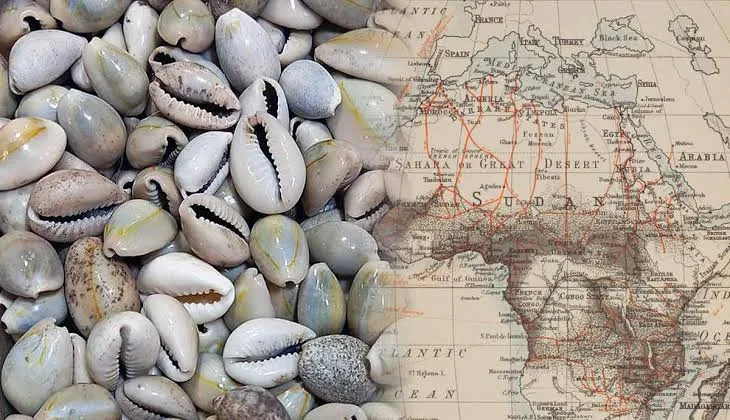
Many societies used goods that lots of people wanted and that lasted reasonably well: cattle in herding cultures, salt in the Roman world and across the Sahara, cocoa beans among the Aztecs and Maya, and cowrie shells across a huge area stretching from China and India to the Pacific islands and West Africa. Cowries mostly came from the Maldives. They were small, tough, hard to fake, and for a long time hard to get in bulk, which made them one of the most widely used monies in history. A seashell, it turns out, can pass most of Chapter 5's job interview.
Coins (from about 600 BCE)
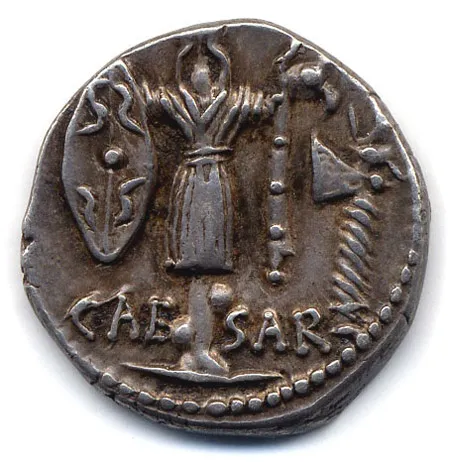
The first standardised coins are usually credited to the kingdom of Lydia, in what's now western Turkey, in the seventh century BCE. They were made of electrum, a natural blend of gold and silver, and stamped with a symbol that vouched for their weight. The idea spread quickly through the Greek and Persian worlds, and China developed coins separately: bronze ones with a square hole in the middle that circulated for over two thousand years. The hole meant you could string them together, so China gets credit for both early coins and the coin necklace.
A coin combined two things: a commodity (the metal) and an authority (the stamp). The stamp saved everyone from weighing and testing metal every time they bought something. It also handed the issuer a very tempting power, which Chapter 9 covers in disapproving detail: quietly changing what's inside while keeping the stamp the same.
Paper money (from about 1000 CE)
Paper money started in China. Merchants in Sichuan issued paper certificates in the tenth century, and in the 1020s the Song government took over issuing them. When the Venetian traveller Marco Polo visited China in the late thirteenth century, he described paper money as if he'd watched a magic trick. Europe took centuries to catch up, through two routes: goldsmiths' receipts, covered in Chapter 13, and the first European banknotes, issued by Stockholms Banco in Sweden in 1661. Stockholms Banco then issued far too many of them and collapsed within a few years, setting a pattern that a lot of later banks would follow.
Bank deposits
By the 1700s and 1800s, a lot of the money merchants in Europe and North America used wasn't coins or paper at all, but entries in a bank's books. You paid someone by moving a balance from your account to theirs, first by cheque and later electronically. Today bank deposits make up most of the money in most economies, which surprises nearly everyone. Chapter 22 explains why.
Digital money
In the late twentieth century, card networks and electronic transfers meant you could spend bank deposits without touching paper. Then came a wave of new ways to pay. PayPal arrived in the late 1990s. In China, Alipay and WeChat Pay turned the phone into a wallet for hundreds of millions of people. India's UPI system made instant phone payments normal for street vendors and billionaires alike. And in 2009, Bitcoin introduced a kind of digital money with no central issuer at all. Chapter 25 looks at all of these using the tools this course builds up.
| Form | Approximate period | What it recorded |
|---|---|---|
| Clay tablets and tally sticks | From c. 3000 BCE | Debts and deliveries in a unit of account |
| Commodities (cowries, salt, cattle) | Ancient times to the early 20th century | Value in a widely wanted good |
| Coins | From c. 600 BCE | A standard weight of metal, guaranteed by a stamp |
| Paper notes | From c. 1000 CE (China), 1661 (Europe) | A claim on metal, and later a claim by law |
| Bank deposits | From the 17th century | A claim on a bank |
| Digital balances | Late 20th century onward | A claim recorded electronically |
The form of money has changed many times. What it does hasn't: it records claims, settles payments, measures value, and carries purchasing power into the future.
Key terms from this lesson
- Commodity money
- money that is also a useful or valued good in its own right, such as salt, cattle, or metal.
- Coinage
- standardised pieces of metal stamped by an authority to guarantee their weight and purity.
- Banknote
- a paper note issued by a bank, originally as a claim on metal held by that bank.
- Bank deposit
- a balance owed by a bank to its customer, usable for payment.
Learn this in a 5-minute interactive lesson
Real charts and practice questions. Free, no sign-up needed.
Related guides
Pajama Markets provides education, not financial advice. Trading forex, crypto and leveraged products carries a high risk of losing money. Practise on a demo account first.