Money Foundations · lesson 19 of 28
Bretton Woods, the IMF, and the World Bank Explained
Learn this in a 5-minute interactive lesson
Real charts and practice questions. Free, no sign-up needed.
A conference in the mountains
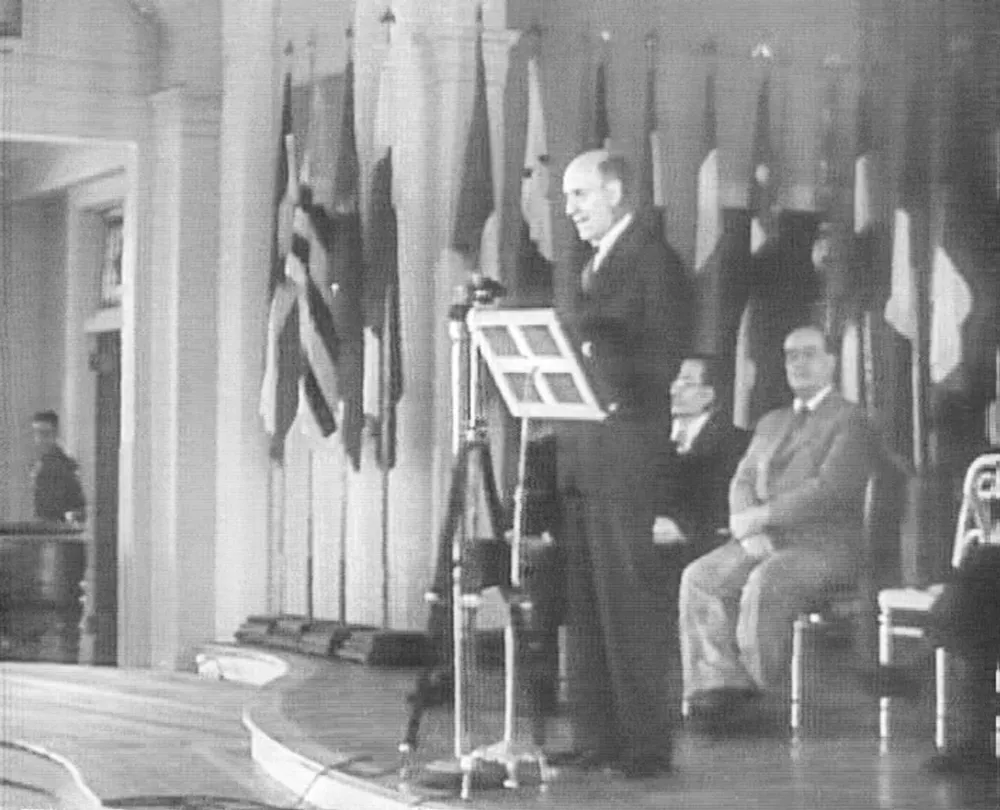
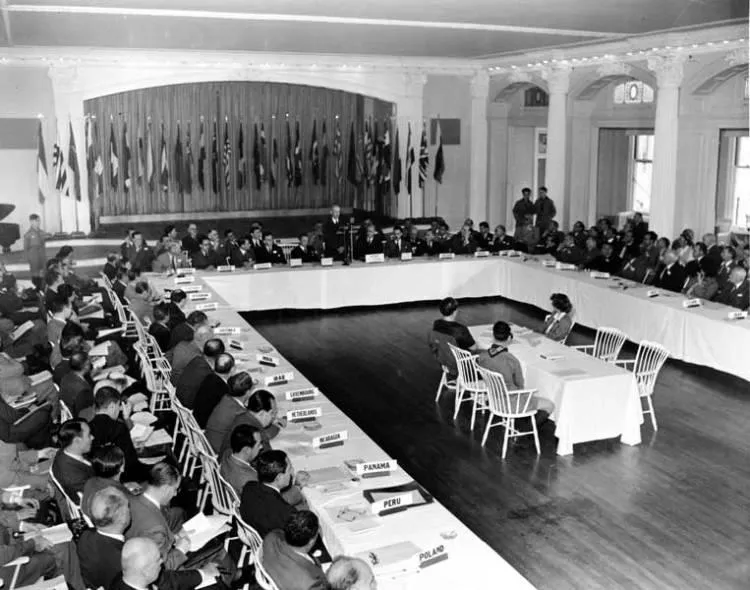
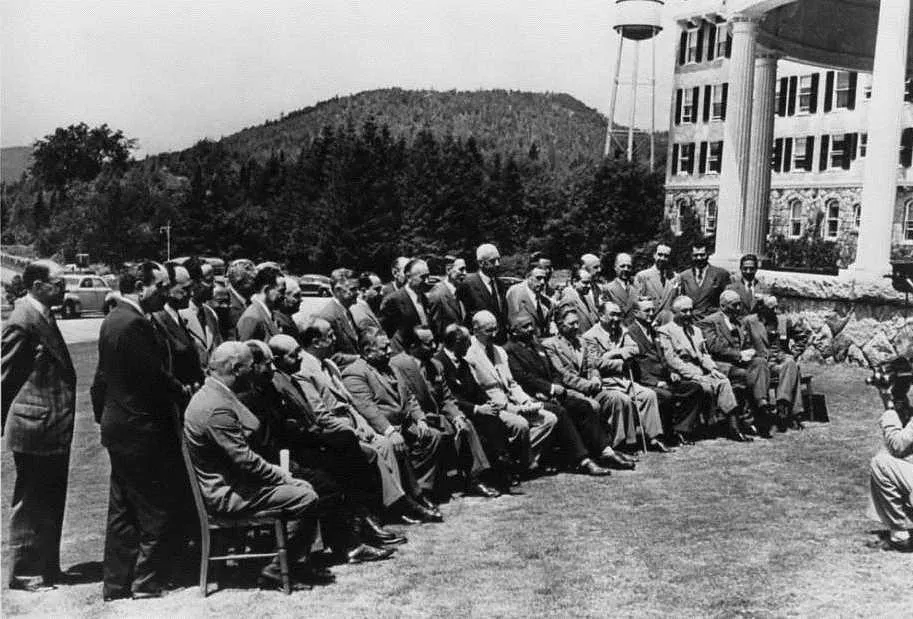
In July 1944, with the Second World War still going on, delegates from 44 Allied countries checked into the Mount Washington Hotel in Bretton Woods, New Hampshire, a big white resort hotel that's still open today. Their job was to design an international monetary system that wouldn't repeat the chaos of the 1920s and 1930s: the competitive devaluations, trade wars, and collapsing exchange rates that had made the Depression worse. The conference ran for three weeks, and by most accounts the hotel bar did very well out of it.
The two biggest figures were Keynes, representing Britain, and Harry Dexter White from the US Treasury. Keynes proposed a brand-new international currency called the bancor, to be issued by a global clearing union. It was clever, ambitious, and very Keynes. White's plan, which put the US dollar at the centre instead, mostly won. That reflected the fact that the United States by then held most of the world's monetary gold and was paying for much of the war. As in poker, it helps to have the most chips.
How it worked
The Bretton Woods system had three main parts:
- 1.The dollar was tied to gold. The United States promised to swap dollars for gold at $35 an ounce, but only for foreign governments and central banks, not ordinary people.
- 2.Other currencies were tied to the dollar. Each member set a fixed exchange rate against the dollar and agreed to keep its market rate within 1 percent of it by buying or selling dollars from its reserves.
- 3.The pegs could be adjusted. A country facing a "fundamental disequilibrium," a phrase vague enough to keep diplomats busy for decades, could change its peg with the approval of the new International Monetary Fund.
Because other currencies were tied to the dollar and the dollar was tied to gold, this was a gold-exchange standard: gold at the bottom, the dollar in the middle, and everyone else stacked on top like layers of a wedding cake. It wasn't a return to the classical gold standard, and ordinary people still couldn't trade their money for gold.
Two institutions
The conference also created two organisations that still exist and that you'll run into often in the news, usually in headlines that start with "IMF warns."
The International Monetary Fund (IMF) was set up to oversee the exchange-rate system and lend to member countries that ran into trouble paying for imports or keeping up with foreign debts. It still lends to countries in crisis, usually on the condition that they make economic reforms, which makes it part emergency room and part very strict personal trainer. It also publishes a lot of the world's best data on the global economy, including which currencies central banks hold in reserve.
The International Bank for Reconstruction and Development, the core of what's now the World Bank, was set up to fund rebuilding in war-damaged Europe. Its focus later moved to long-term development loans for poorer countries: roads, power stations, water systems, schools, and hospitals.
An easy way to keep them apart: the IMF mostly deals with short-term money problems between countries, and the World Bank mostly deals with long-term investment in development. One is the fire brigade, the other is the construction company.
The balance of payments
A country's balance of payments records everything it does financially with the rest of the world. Money comes in when it exports goods and services, earns income from abroad, or attracts foreign investment and loans. Money goes out when it imports, pays income to foreigners, or invests and lends abroad. Think of it as the country's bank statement, and like a personal bank statement, it isn't always pleasant reading.
In one year, Country X earns $80 billion from exports and receives $10 billion in money sent home by citizens working abroad. It spends $120 billion on imports. Foreign investors bring in $10 billion.
Inflows: 80 + 10 + 10 = $100 billion. Outflows: $120 billion. Shortfall: $20 billion.
Country X has to cover that gap somehow. It can spend its foreign-exchange reserves, borrow from abroad, or let its currency fall so imports get more expensive and exports get cheaper. If its reserves run low and lenders get nervous, it may end up calling the IMF. That's a balance-of-payments crisis. Britain in 1976, Mexico in 1994, Thailand and South Korea in 1997, and Greece in 2010 all went through versions of one, so it isn't a problem that only hits one kind of country.
Key terms from this lesson
- Bretton Woods system
- the post-war system (1944–1971) of fixed but adjustable exchange rates pegged to the dollar, with the dollar convertible into gold for foreign official holders.
- Peg
- a fixed exchange rate maintained by a government or central bank.
- Gold-exchange standard
- a system in which currencies are linked to a reserve currency that is itself linked to gold.
- International Monetary Fund (IMF)
- the institution that oversees the international monetary system and lends to countries with payments problems.
- World Bank
- the institution that provides long-term development finance.
- Balance of payments
- the record of all transactions between a country and the rest of the world.
Learn this in a 5-minute interactive lesson
Real charts and practice questions. Free, no sign-up needed.
Related guides
Pajama Markets provides education, not financial advice. Trading forex, crypto and leveraged products carries a high risk of losing money. Practise on a demo account first.