Crypto Trading · lesson 26 of 29
Crypto Psychology Explained
Learn this in a 5-minute interactive lesson
Real charts and practice questions. Free, no sign-up needed.
A market that never lets you rest
Stock markets close at night. Forex closes at weekends. Crypto never stops. That sounds like more opportunity, and it is, but it also means there's never a moment when you're "allowed" to stop watching. Lots of crypto traders end up checking prices in bed, at dinner, and in the middle of conversations, and their sleep and mood start to depend on a chart. You can't make good decisions on four hours of sleep and fourteen price alerts.
The emotion cycle
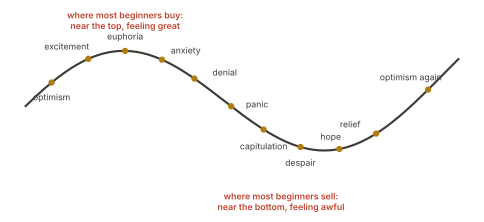
Crypto runs this cycle faster and louder than any other market, because the swings are bigger and social media amplifies every one of them.
The usual traps, crypto edition
FOMO. A coin is up 40 percent today and everyone in your group chat is posting gains. Jumping in now usually means buying from the people who got in early. Rule: if it wasn't on your watchlist with a planned entry before it moved, you don't buy it after.
FUD (fear, uncertainty, and doubt). Scary headlines and rumours can make you sell good positions at the worst moment. Rule: your stop decides when you're wrong, not a post on social media.
Influencers and group chats. Many people posting coin tips are paid to promote them, or bought earlier and need buyers to sell to. When a coin is being pushed hard by lots of accounts at once, ask who's selling to you.
Bag-holding. "I'll sell when it gets back to what I paid." That's the sunk-cost trap: the market doesn't know or care what you paid. The only question that matters is whether you'd buy the coin today at today's price. If the answer is no, you're not investing, you're hoping.
"Diamond hands." Holding through a crash can be right for a long-term investment you've planned for. It's a disaster for a leveraged trade or a memecoin that's going to zero. Know which one you're in before the crash, not during it.
Revenge trading and tilt. After a loss, you feel the urge to win it back straight away, with more size and less thought. Rule: two losses and you're done for the day. After any loss that makes you angry, close the app for at least an hour.
Overconfidence. A few big wins in a rising market can make anyone feel like a genius. In a bull market, almost everyone looks clever. Keep your risk the same after wins as after losses.
Habits that help
- Use alerts, not staring. Set price alerts at your levels and close the app.
- Put your stops and targets in when you enter, then leave them.
- Turn off the noise. Mute coin-tip channels and accounts that make you anxious or greedy.
- Set trading hours, and keep at least one day a week completely chart-free.
- Write down your emotions in your journal, so you can see which feelings come before your worst trades.
- Think in sets of 20 trades. One trade is close to a coin toss. Judge yourself on whether you followed your rules across the set.
When it stops being trading
Very high leverage and brand-new memecoins can work almost exactly like a casino: fast results, flashing numbers, near-misses, and the feeling that the next one will make up for the last. Be honest with yourself if you notice any of these:
- trading with money meant for rent, school fees, food, or bills;
- borrowing money, or using credit, to trade or to win back losses;
- hiding your trading or your losses from people close to you;
- not being able to stop, even when you've decided to;
- needing bigger trades or more leverage to feel anything.
If that sounds familiar, stop trading, tell someone you trust, and consider contacting a gambling support service in your country. There's no shame in it. Lots of people have been there, and it's far easier to deal with early than late.
Kevin set his phone to alert him on every 2 percent move in any coin he owned. He owned eleven coins. He woke up at 3 a.m. to a red alert, panic-sold, went back to sleep, and woke up at 7 to find the price had recovered. He did this four nights in a row. Then he turned off the alerts, set stop orders, and slept through the night for the first time in a month. His results got better. So did his skin.
Key terms from this lesson
- FOMO (fear of missing out)
- the urge to buy after a big move because others seem to be profiting.
- FUD (fear, uncertainty, and doubt)
- scary news or rumours that push people to sell.
- Bag-holding
- holding a losing position in the hope it returns to the purchase price.
- Sunk-cost trap
- letting money already spent decide what you do next.
- Tilt
- a state of frustration that leads to poor, impulsive decisions.
Learn this in a 5-minute interactive lesson
Real charts and practice questions. Free, no sign-up needed.
Related guides
Pajama Markets provides education, not financial advice. Trading forex, crypto and leveraged products carries a high risk of losing money. Practise on a demo account first.